
When the first real snowfall settles over Minnesota, a lot of homeowners look out at their own sunroom, a neighbor’s, or the one they’ve been picturing and wonder the same thing: “With all that glass, can it really take a Minnesota winter?” It’s a fair question. Snow is heavy, especially the wet stuff that tends to arrive early and late in the season, and a sunroom roof may carry it for months at a time. That’s why sunroom snow load is one of the first things a good builder plans for, not an afterthought.
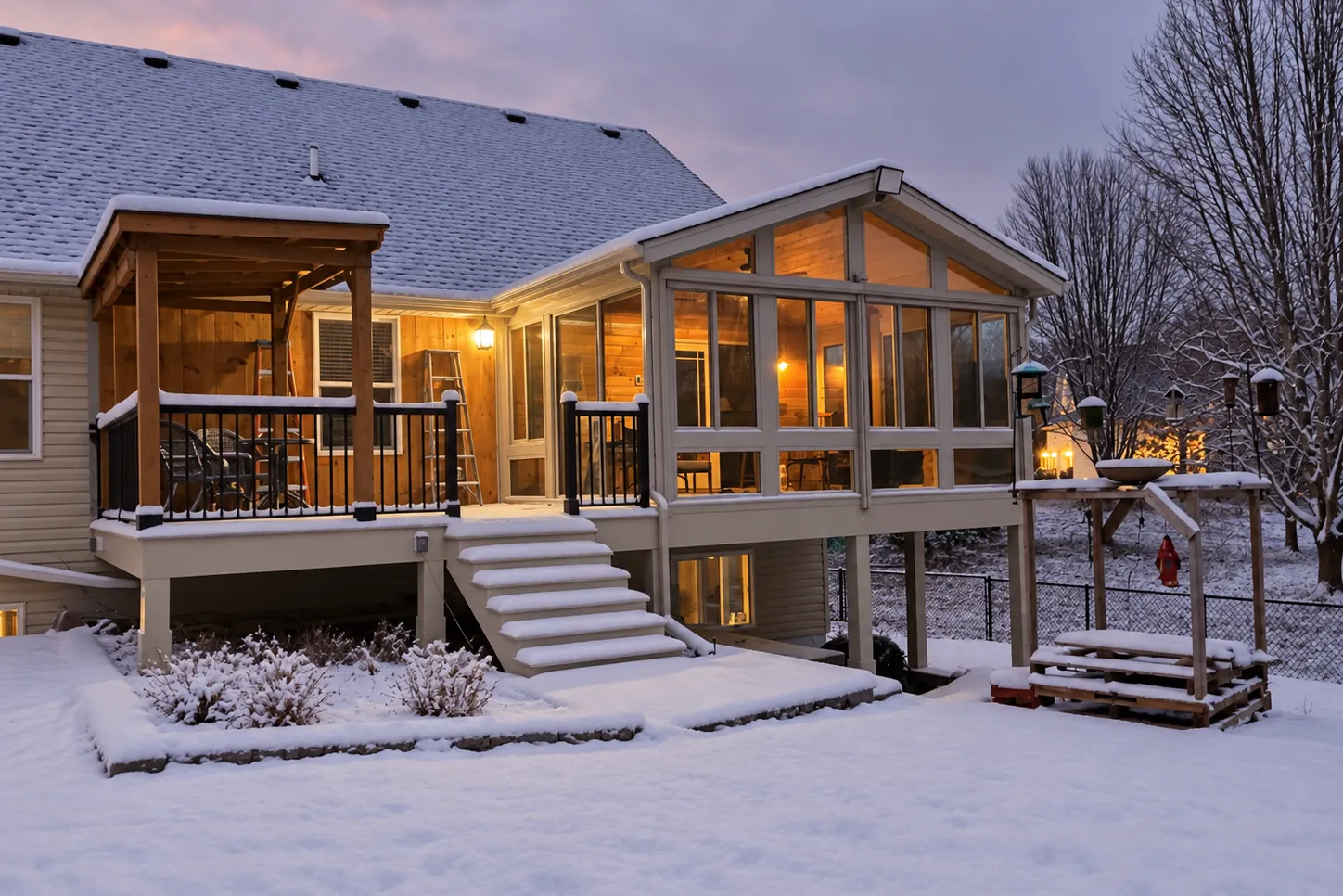
Here’s what a Minnesota winter actually asks of a sunroom:
- Snow load on the roof — Snow is weight, and a roof has to carry what builds up over a season, not just a single storm; wet, heavy snow weighs far more than light powder
- Slide-off and drifting — Where a sunroom sits below a taller roofline, snow can slide down or drift onto the sunroom roof, concentrating extra weight in certain spots
- Ice where the roofs meet — The connection between the sunroom and your home is where melting and refreezing tend to show up first
- Freeze-thaw cycles in the ground — With frost reaching 42″ to 60″ deep in Minnesota, soil heaves and settles every year, and the room needs a foundation that won’t move with it
- Wide temperature swings — From -25° nights to 95° afternoons, materials expand and contract all year long, so every component has to be made for that range
How an All-Season Sunroom Is Built to Carry It
Winter strength comes from the whole system working together, not any single part:
- Code-based roof design — Minnesota building codes set the snow load a roof must be designed to carry, and a permitted sunroom is reviewed and inspected against those requirements
- Insulated roof panels — An insulated roof keeps the room’s heat inside instead of warming the snow from below, which helps limit the melt-and-refreeze cycle behind ice buildup
- Systems engineered for the Midwest — Betterliving all-season systems, made by Craft-Bilt in the USA, are designed for Midwest climates, from -25° winters to 95° summers
- A foundation below the frost — Footings set below the frost line, or helical piers where the site calls for them, keep frost heave from shifting the room
The Spot That Matters Most: Where the Sunroom Meets Your Home
If there’s one place winter tests a sunroom hardest, it’s the connection to the house. That’s where a higher roof can shed snow onto a lower one, where meltwater collects, and where flashing, roof pitch, and drainage all have to work together. It’s also the spot most likely to suffer when a project is split between separate crews with one for the foundation, one for the room, another for the roofing tie-in and nobody owns the gaps in between. At Signature Sunrooms by Allan Dorney Construction, one team plans and builds the whole project, so the details where the room meets your home are worked out before the first footing goes in.
After a Big Storm: A Few Things to Keep an Eye On
A well-built sunroom doesn’t need babysitting through the winter, but a quick look after a heavy snowfall is a good habit:
- Heavy drifts or slide-off — Notice whether snow from a higher roof has piled up in one area of the sunroom roof
- Ice along the roof connection — Some icicles are part of any Minnesota winter, but heavy, persistent ice where the roofs meet is worth mentioning to your builder
- Water spots inside — Stains or drips on the ceiling or walls after a thaw can point to a drainage or flashing issue that’s easier to fix early
- Blocked gutters and downspouts — Meltwater needs somewhere to go, and clogged drainage is one of the most common reasons ice builds up
- Call before you climb — If you’re ever unsure whether snow on the roof needs attention, give your builder a call before climbing up or reaching for a shovel
Minnesota winters are tough, but they’re exactly what an all-season sunroom is built for. If you’re wondering how a sunroom would handle snow at your home on your roofline, your yard, the way the wind drifts across your lot we’re happy to walk through it with you. No pressure, just honest answers. Learn about our process or reach out whenever you have questions.